
Sampson County Arrest Records and Court Charges
Sampson County arrest records are tied to the sheriff or arresting agency side of an event. They may involve an arrest report, jail booking, current confinement, charge label, arresting agency, booking or admit date, and custody status when the person is held at the Sampson County Detention Center. The Sheriff's Office page says Citizen Connect lets users view incident reports, arrest reports, jail bookings, and current inmate confinement information.
Court charges after arrest are different. Once a prosecutor files or reviews the formal accusations, the charge record becomes part of the court case. A charge can appear in sheriff booking data, Portal case records, citation records, and court calendars, but the final outcome appears in the criminal case file. For full plea, disposition, sentence, and appeal details, use Sampson County criminal court records.
The official sheriff Citizen Connect portal is the county source for incident, arrest, jail booking, and confinement links.
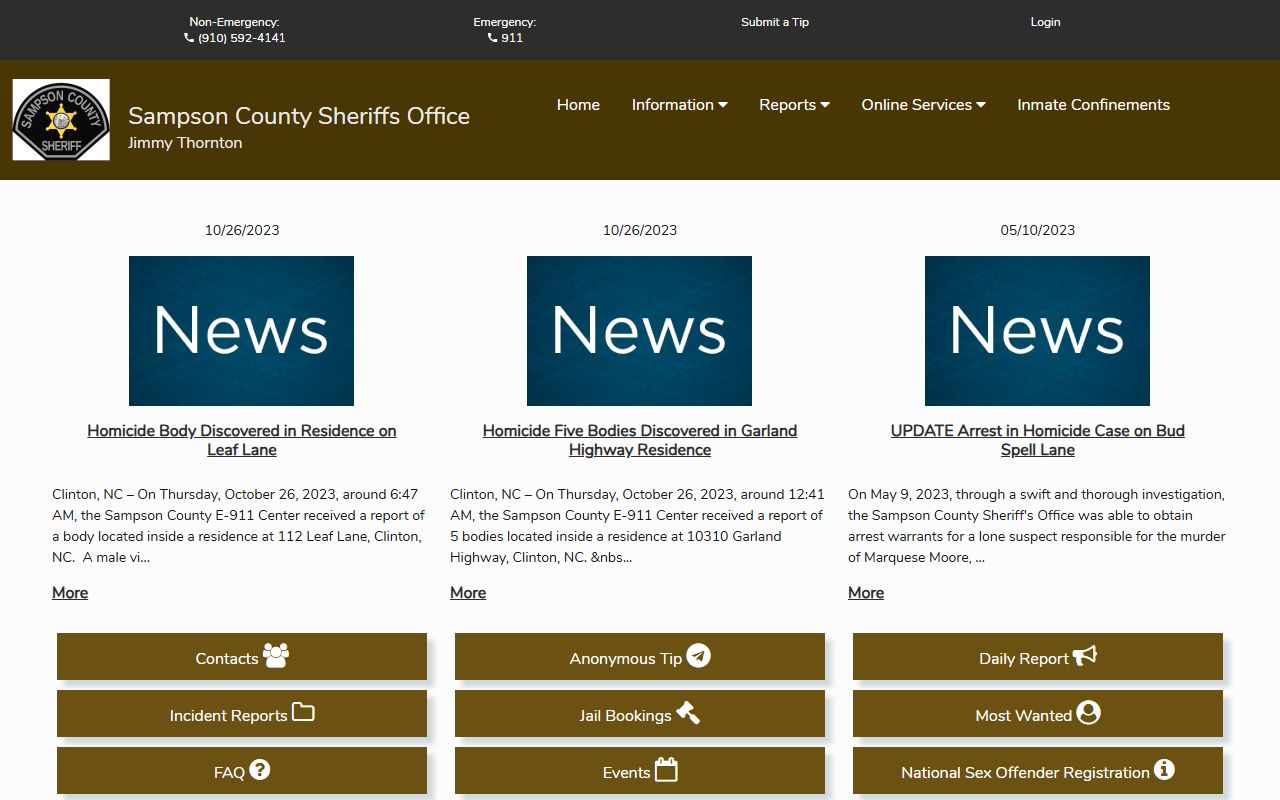
Citizen Connect helps identify arrest-side information before a user checks the court case or charge status.
Find Sampson County Arrest Records
Use official channels in sequence. Start with Sampson County Sheriff's Office Citizen Connect for arrest reports, jail bookings, current inmate confinement, incident reports, and related sheriff data. Then use North Carolina eCourts Portal for court charges after arrest, returned criminal process, court dates, and case outcomes that have entered the court file. If the person is in custody, the Detention Center or inmate confinement search may answer custody questions faster than Portal.
- Open Sampson County Citizen Connect for sheriff-side arrest reports, incident reports, jail bookings, and confinement links.
- Use the Citizen Connect inmate confinements search if custody or booking status is the main issue.
- Search eCourts Portal Smart Search by defendant name or case number to find filed court charges.
- Review each charge's offense name, statute, agency, bond, court date, and current status when shown.
- Contact the Clerk of Superior Court for certified court copies or the Sheriff's Office for records not online, subject to law-enforcement limits.
The inmate confinement search is an official source for booking and current confinement categories.
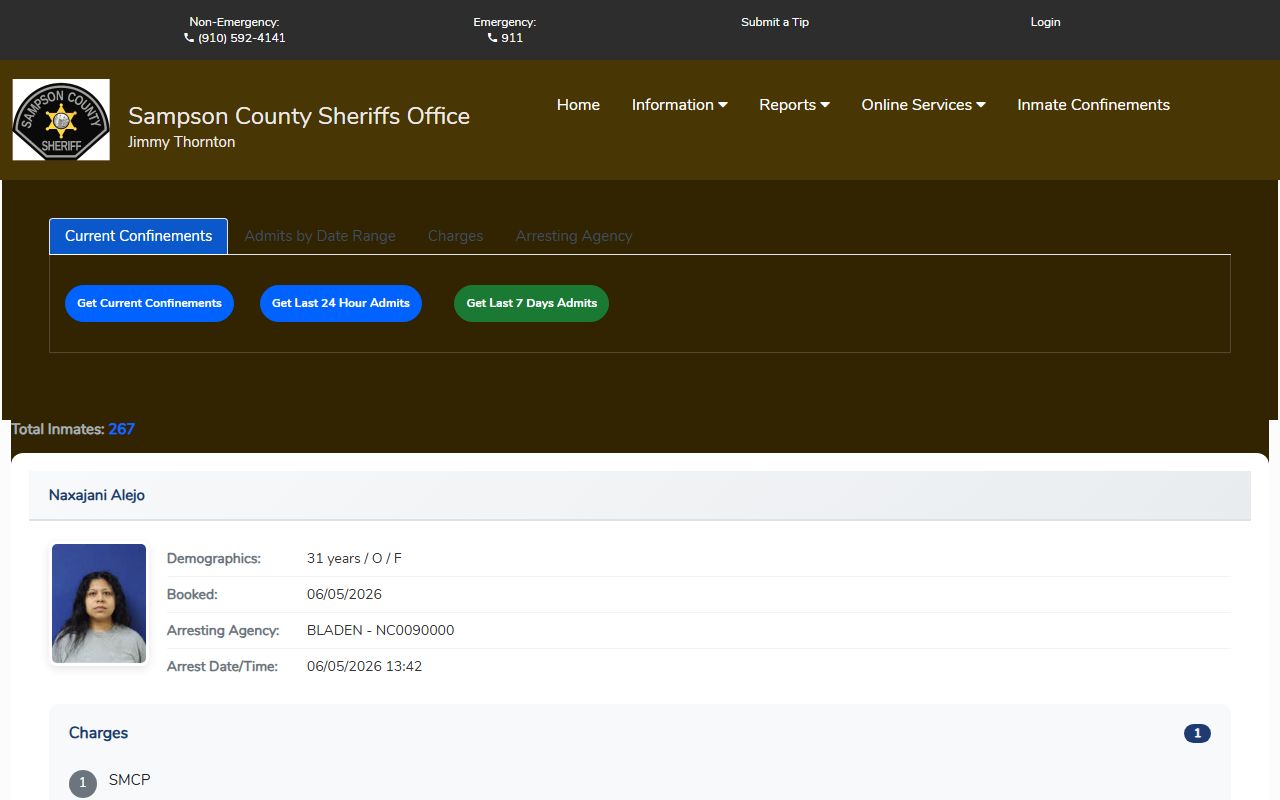
That booking channel should be kept separate from the court charge record and final criminal disposition.
Charges After Arrest Documents
Charges after arrest reach the court through criminal process and charging documents. North Carolina court records may show returned warrants, criminal summonses, indictments, informations, citations, or other filed process. The Sheriff's Office Administrative Services unit receives warrants, orders for arrest, criminal summonses, and subpoenas, then issues criminal papers to patrol. The District Attorney represents the State in criminal cases and prepares the criminal trial docket.
| Document | Who initiates it | Common use | Record clue |
|---|---|---|---|
| Complaint or warrant process | Law enforcement or judicial official review | Starts or supports many criminal accusations and arrests | May show warrant/process number, charge, agency, bond, and court date. |
| Information | Prosecutor | Formal prosecutor-filed accusation where allowed | Shows the State's filed charge and case path. |
| Indictment | Grand jury | Formal felony accusation in Superior Court | Public unless sealed by court order under the court-record provision. |
The Sampson County Sheriff's Office page gives the local law-enforcement context for arrest records and criminal process.
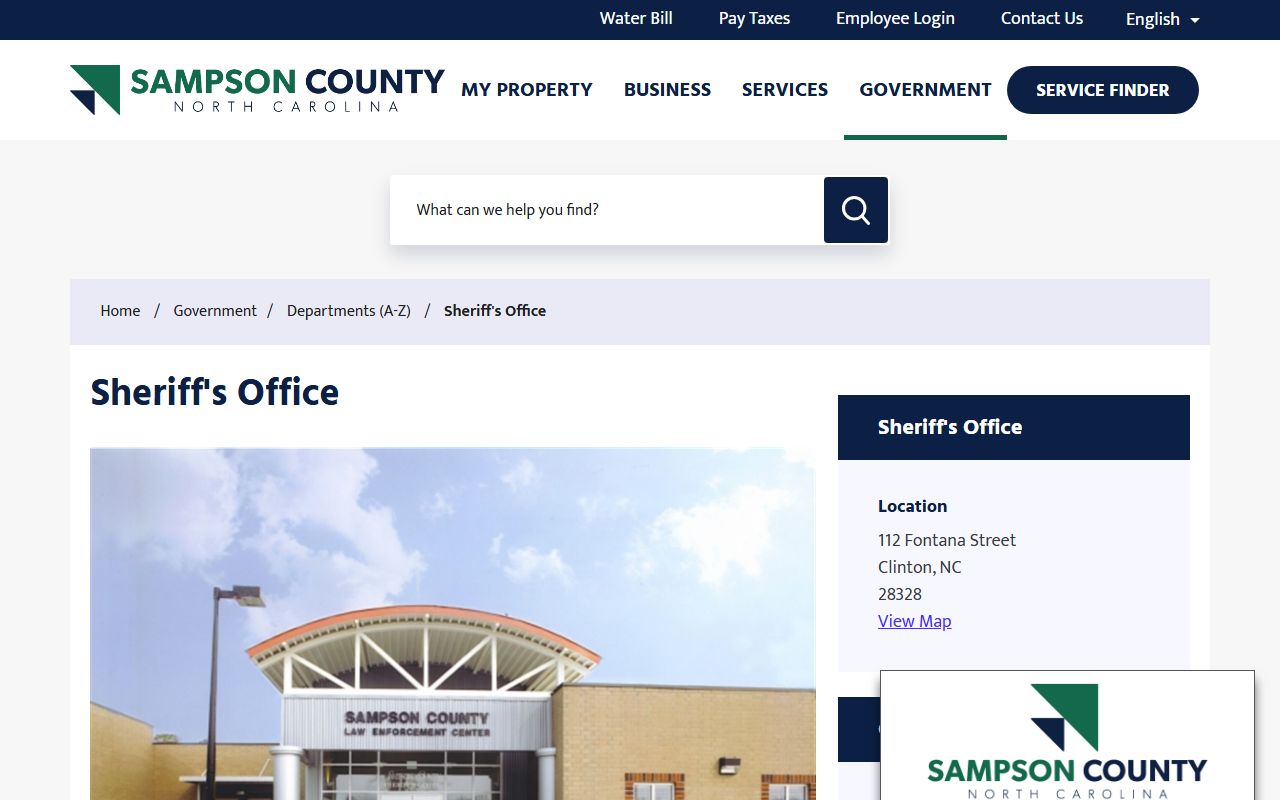
That office handles arrest and process functions, while the court case record is maintained by the court system.
Sampson County Charge Status
A charge status tells what has happened to an accusation at a point in time. It should not be read as a conviction unless the disposition says so. Sampson County court charge records may change when the prosecutor amends a charge, dismisses a count, reduces an offense, files a new charging document, or resolves the case through plea or trial.
| Status | What It Means | How to Read It |
|---|---|---|
| Pending | The charge remains active or unresolved. | Check the next court date, bond terms, and any motions or continuances. |
| Amended | The filed charge changed. | Compare the original charge to the later charge and disposition. |
| Reduced | The accusation moved to a lower offense or severity level. | Look for plea, judgment, or dismissal entries tied to each count. |
| Dismissed | The charge ended without a conviction on that count. | Confirm whether dismissal is with prejudice, without prejudice, or part of a plea on another count. |
| Nolle prosequi | The prosecutor elects not to pursue the charge. | Read with the full docket because other charges may remain. |
| Convicted | A guilty plea, verdict, or qualifying finding established guilt. | Review sentencing, probation, costs, restitution, and appeal status. |
Note: One arrest can produce several charges, and each charge may have a different final status.
Sampson Charges vs Convictions
Arrest records and court charges are often misunderstood because they appear early in a case. An arrest shows that a person was taken into custody or processed. A charge shows the accusation filed or tracked in the court case. A conviction requires a later guilty plea, verdict, or court finding. A search result that shows an arrest or charge does not prove guilt.
| Point | Charge | Conviction |
|---|---|---|
| Timing | Appears after arrest, citation, warrant, summons, information, or indictment. | Appears after plea, verdict, or qualifying court finding. |
| Meaning | Formal accusation that must still be resolved. | Final guilt outcome for that charge or count. |
| Possible outcomes | Pending, amended, reduced, dismissed, nolle prosequi, or disposed. | Sentence, probation, costs, fines, restitution, or appeal may follow. |
| Best source | Booking data, eCourts Portal, court calendars, and clerk records. | Criminal case file, judgment, and sentencing entries. |
Sampson Arrest Records and Custody
The Sampson County Sheriff's Office is at 112 Fontana Street in Clinton. The county lists Sheriff Jimmy Thornton, a main Sheriff's Office phone of (910) 592-4141, and Detention Center phone of (910) 592-8178. The Detention Center page says detention staff process arrestees, fingerprint and photograph them, conduct security searches, serve warrants on inmates, supervise inmates, transport inmates to other facilities, and perform DNA testing for the court system where applicable.
The Detention Center is the official custody source when the question is whether someone is currently confined. The court case is the source for filed charges, court dates, plea, disposition, and sentence. The two records can overlap, but they do not update for the same reasons or on the same schedule.
The official Detention Center page gives the local custody context for arrest records.
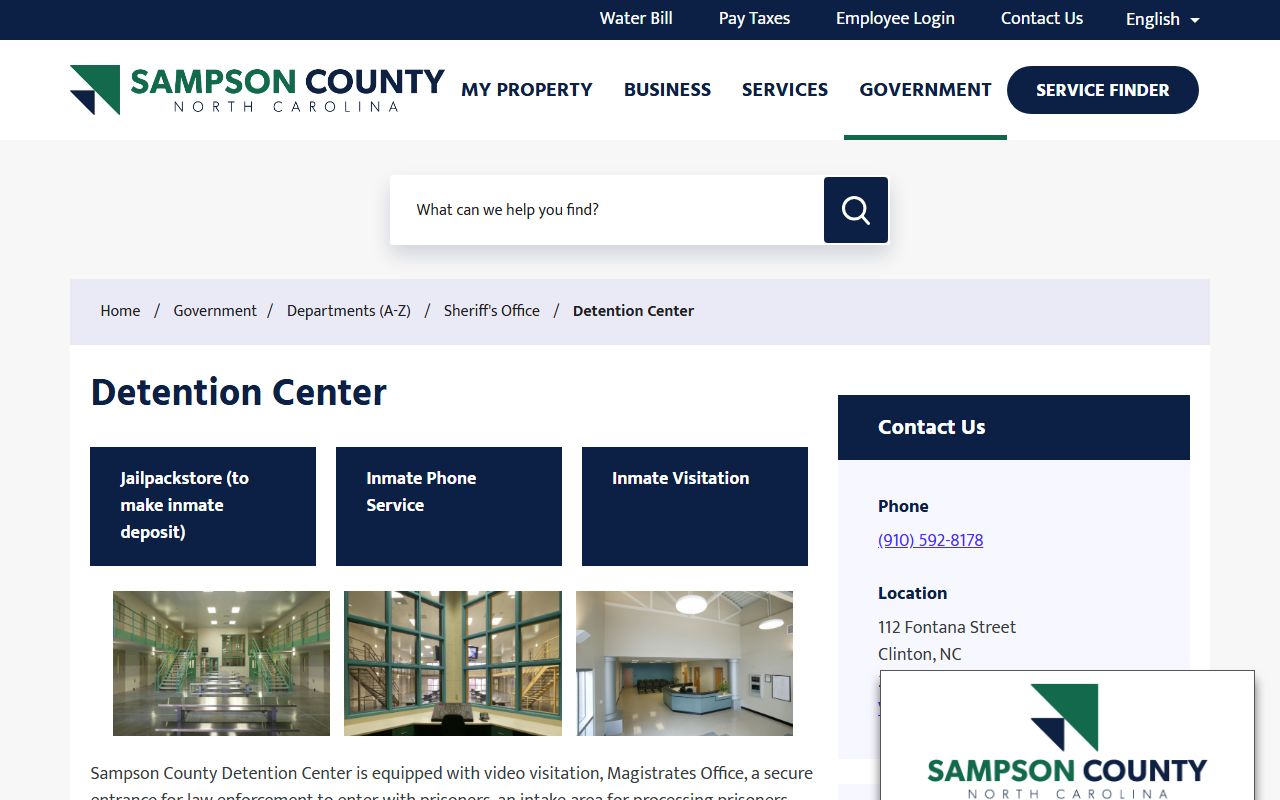
Custody data is useful for booking status, while eCourts and the clerk are needed for the court charge path.
Statewide Criminal Record Channels
Sampson County arrest records and court charges may also lead to statewide systems, but those systems answer different questions. The N.C. Department of Adult Correction offender search covers state prison, probation, and parole information and does not replace county jail booking data. The North Carolina Sex Offender and Public Protection Registry is maintained by NCSBI and includes public registry search tools, alerts, and a warning against misuse for threats, stalking, intimidation, or harassment.
The N.C. Department of Adult Correction offender search is a post-court or supervision channel, not a Sampson County jail roster.
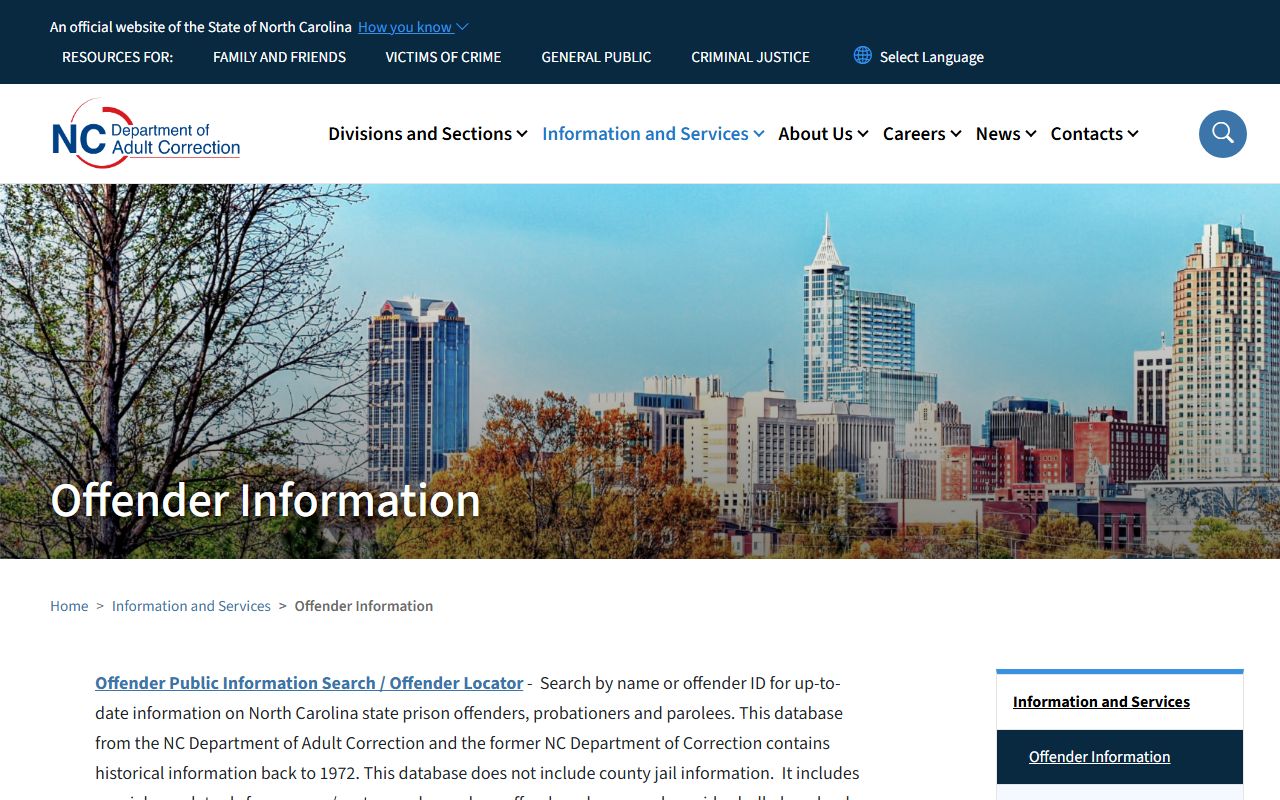
Use it when a person may be in state custody, on probation, or on parole rather than in county jail.
The North Carolina Sex Offender and Public Protection Registry is a separate public-safety record source.
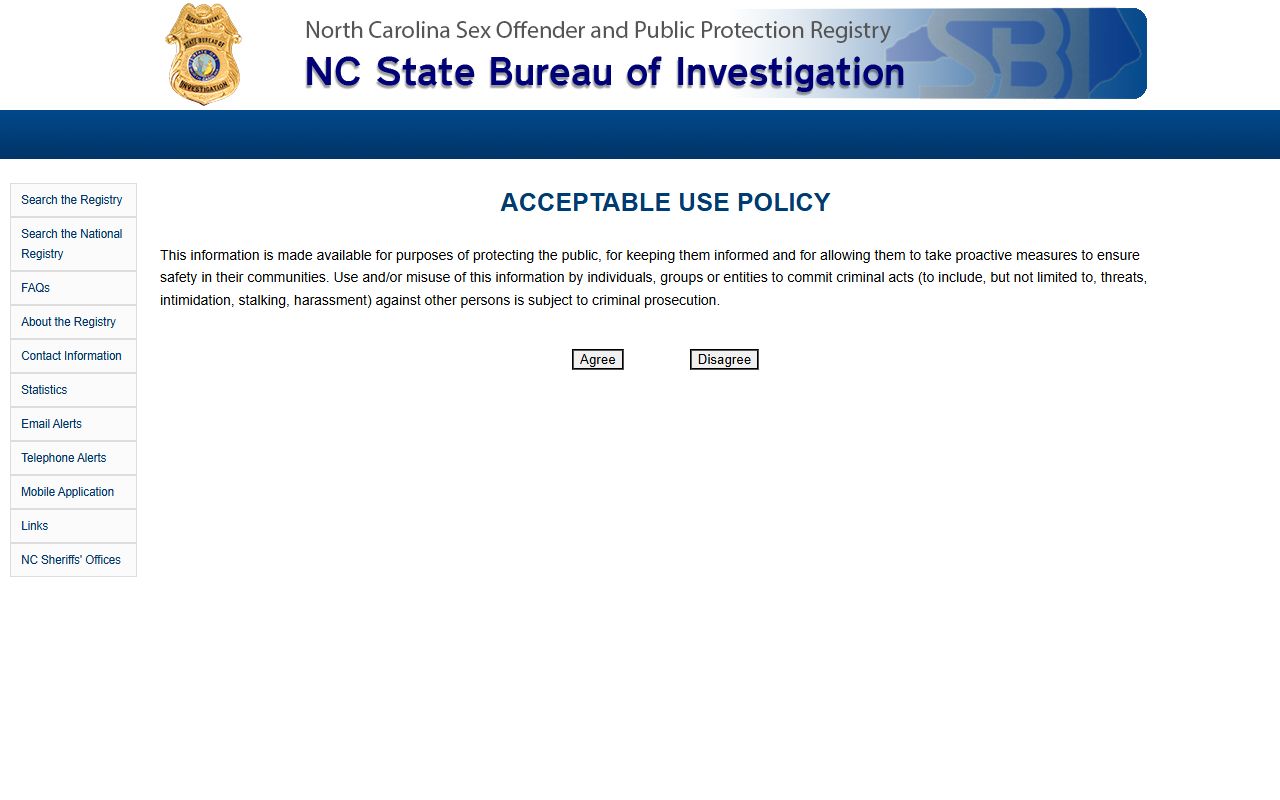
Registry status should not be confused with an ordinary arrest record or current criminal charge.
Restricted Arrest and Charge Records
Public access has limits. Juvenile case records are withheld from public inspection under G.S. 7B-3000 except where law or court order allows access. Sealed files, expunged criminal matters, mental-health proceedings, adoption records, active investigations, and records with protected personal data may be missing from public search results or redacted.
| Point | Sealed | Expunged |
|---|---|---|
| Public access | Restricted by statute or court order. | Removed from ordinary public access after a granted expunction. |
| Common record types | Juvenile, mental-health, sealed warrant, or sensitive court files. | Eligible dismissed matters, some juvenile records, first-offender matters, or older nonviolent convictions. |
| Search result effect | May be hidden or limited in Portal and clerk inspection. | May no longer appear in public criminal-history access. |
| Where to start | Clerk of Superior Court or the order sealing the file. | Petition in the county where the case was handled, such as Sampson County. |
Under Chapter 132, returned arrest and search warrants can be public unless sealed by court order. That rule does not mean every active or unserved warrant, investigation, or arrest file is available in real time.