
Sampson County Trial Court Structure
North Carolina has no separate Sampson County municipal court, justice court, JP court, or independent county court system. The North Carolina Judicial Branch describes the General Court of Justice as a unified statewide court system. Trial work is divided between Superior Court and District Court, with magistrates working inside District Court. Sampson County is listed in Prosecutorial District 5, Superior Court District 5, and District Court District 5.
Superior Court is the trial division for felony criminal cases, civil cases over the state jurisdictional threshold, and many appeals from District Court. District Court is the trial division most people meet first for traffic citations, infractions, misdemeanors, small claims, domestic cases, child custody and support, juvenile matters, and magistrate-level proceedings. The Clerk of Superior Court is the court-record custodian for both divisions in Sampson County.
The court structure matters for records because a search term such as "district court" may not cover every Sampson County trial court file. Felony records, estate records, judgments, traffic citations, small claims, and domestic matters can all be court records, but the division and custodian determine the right search and copy path.
Sampson County Court Contacts
The official courthouse contacts place the main trial court work at the Sampson County Courthouse in Clinton, with nearby annex and extension buildings also listed by the Judicial Branch. A hearing notice, summons, citation, or Portal hearing result should control the building for a specific court date because the courthouse, annex, and extension are close together but separate locations.
| Court or office | Type | Address | Phone |
|---|---|---|---|
| Sampson County Superior Court | Superior Court District 5 | 101 E. Main St, Clinton, NC 28328 | (910) 596-6616 for Superior Court Judges; main (910) 596-6600 |
| Sampson County District Court | District Court District 5 | 101 E. Main St, Clinton, NC 28328 | (910) 596-6612 for District Court Judges; main (910) 596-6600 |
| Clerk of Superior Court | Record custodian, estates, special proceedings | 101 E. Main St, Clinton, NC 28328 | (910) 596-6600 |
| District Attorney | Prosecutorial District 5 | Local court contact at Sampson County Courthouse | (910) 596-6610 local; (910) 478-3610 district |
| Public Defender | Defender District 5 | 202 Sampson Street, Clinton, NC 28328 | (910) 596-6614 |
The main courthouse lists public hours of Monday-Friday, 8:30 AM-5:00 PM, with wheelchair access and elevators. The annex is at 119 W Main St, and the extension is at 201 E Main St, both in Clinton.
Sampson County Court Comparison
Because North Carolina does not use local county courts or JP courts, the practical comparison is between Superior Court, District Court, and magistrate functions. All three are part of the state court structure, not separate county-run tribunals. This is different from states where a county court or justice court may keep its own records.
| Feature | Superior Court | District Court | Magistrate |
|---|---|---|---|
| Main civil role | Civil cases over $25,000 and certain appeals | Lower-value civil cases, domestic matters, small claims appeals | Small claims functions and preliminary matters within District Court |
| Main criminal role | Felony criminal cases | Misdemeanors, infractions, traffic, juvenile matters | Initial criminal process, warrants, first appearances, bonds |
| Record custodian | Clerk of Superior Court | Clerk of Superior Court | Clerk of Superior Court for resulting court records |
| Common search path | NC eCourts Portal and clerk | NC eCourts Portal and clerk | Portal or clerk after the matter becomes a court record |
Sampson County Case Movement
A Sampson County case may move between levels depending on the case type. Some District Court judgments can be appealed to Superior Court. Trial-court appeals then move to the North Carolina Court of Appeals unless a statute or rule routes the matter differently. From there, some cases may be reviewed by the Supreme Court of North Carolina. Federal appeals are separate and go to the U.S. Court of Appeals for the Fourth Circuit.
Criminal flow: Charge or arrest › magistrate process or first appearance › District Court setting for lower-level cases or Superior Court path for felonies › plea, dismissal, trial, or judgment › sentencing or costs › appeal if available.
Civil flow: Complaint or petition filed › service › answer or default period › motions, mediation, or hearings › trial or judgment › appeal where permitted.
Traffic flow: Citation filed › Portal or court-date lookup › payment or court appearance if eligible › disposition › separate NCDMV driver-record consequences when applicable.
For record searches, this means a person should check the court date and case type before assuming the matter belongs only in District Court. A felony case can begin with magistrate or District Court activity and later proceed in Superior Court.
Sampson County Magistrate Role
Magistrates are judicial officials within the District Court system. In Sampson County, magistrates can be involved at the front end of criminal and civil matters. They issue criminal process, handle warrants and certain orders for arrest, set many initial bonds, conduct some first-appearance or preliminary functions, and handle small claims duties. The detention center research also notes a Magistrates Office inside the facility, which supports the local custody and initial-process workflow.
Magistrate involvement does not create a separate magistrate court file outside the state trial court system. Once a matter is filed, returned, scheduled, or otherwise entered as a court record, the search path generally returns to Portal and the Clerk of Superior Court. That is why a warrant, citation, small claim, or bond issue may involve a magistrate at first but still produce a record held under the Clerk of Superior Court.
Note: Sampson County users should not search for a JP court or municipal court because North Carolina does not operate those local court systems.
Sampson County Trial Court Records
Sampson County trial court records can include complaints, answers, motions, orders, judgments, notices, hearing entries, charges, indictments, criminal summonses, appearances, pleas, dismissals, sentencing entries, probation conditions, fines, costs, traffic citation records, small claims papers, domestic orders, juvenile matters, and estate or special proceeding records. Public access depends on the record type. Juvenile, adoption, mental health, sealed, expunged, and sensitive personal data can be restricted or redacted.
Use the NC eCourts Portal for Smart Search, Search Hearings, payments, and judgment search when available. Use the Clerk of Superior Court for certified copies, older records, divorce judgments, estate files, background-check-quality court searches, and documents not visible online. Traffic payments may also use the Judicial Branch payment portal when eligible, but some citations require a court appearance.
Federal Court Is Separate
Sampson County is in the U.S. District Court for the Eastern District of North Carolina, but federal court records are not Sampson County Superior Court or District Court records. Federal civil and criminal cases, federal bankruptcy cases, and federal appeals use federal court systems such as CM/ECF and PACER. The state eCourts Portal will not be the official record source for those federal files.
The Eastern District CM/ECF login is one federal filing and case-management source assigned to this page.
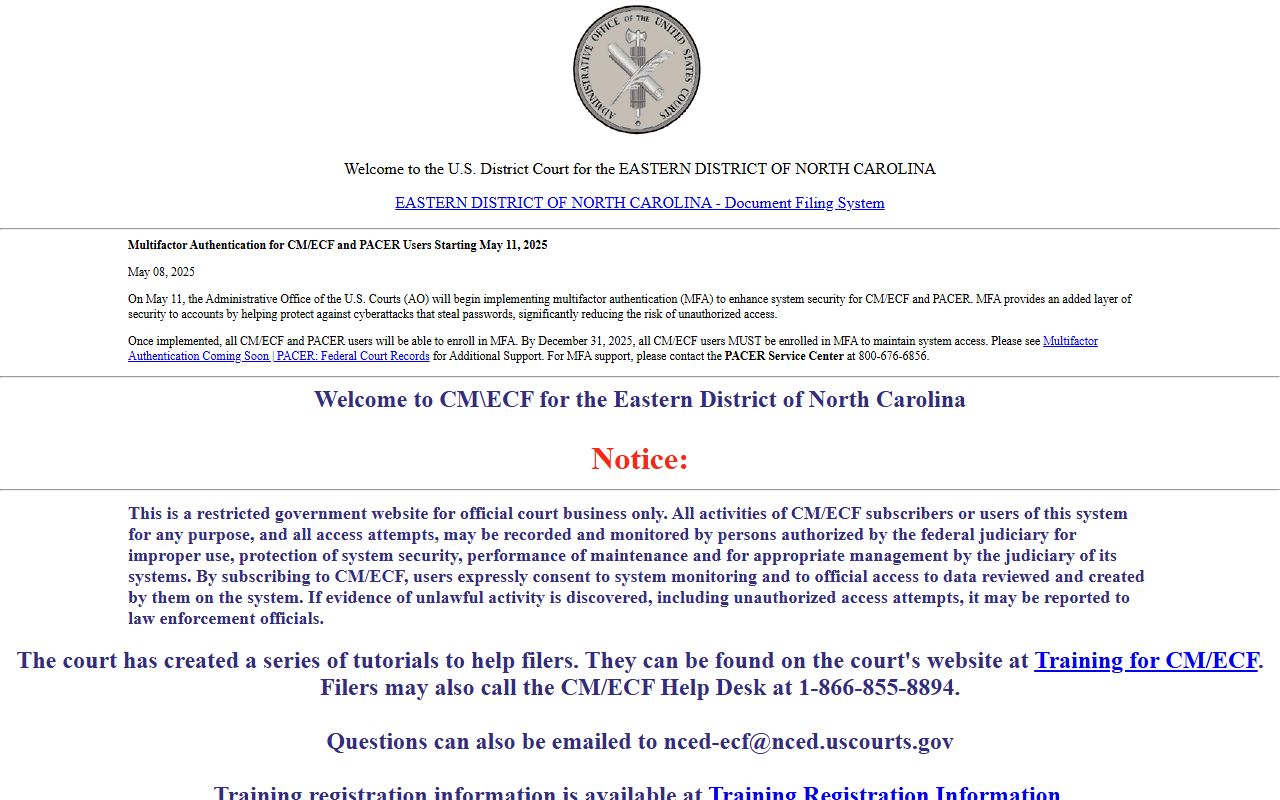
Use it only for federal Eastern District records, not for Sampson County Superior Court or District Court case searches.
The Eastern District CM/ECF overview explains that federal CM/ECF is an internet-based document filing and case-management system.
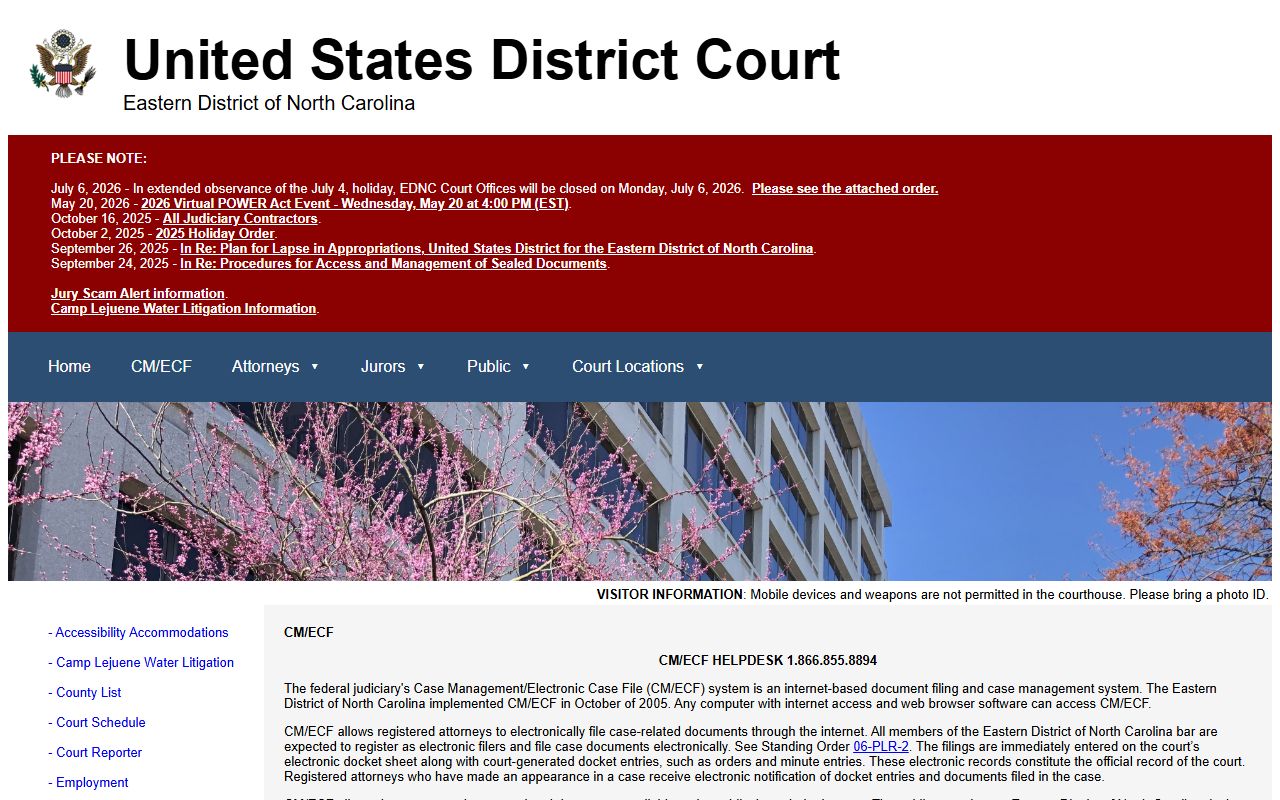
That federal overview is useful when a case is in federal court, but Sampson County state trial court copies still come through the state court path.
The PACER lookup for the Eastern District of North Carolina identifies the official federal court record system.
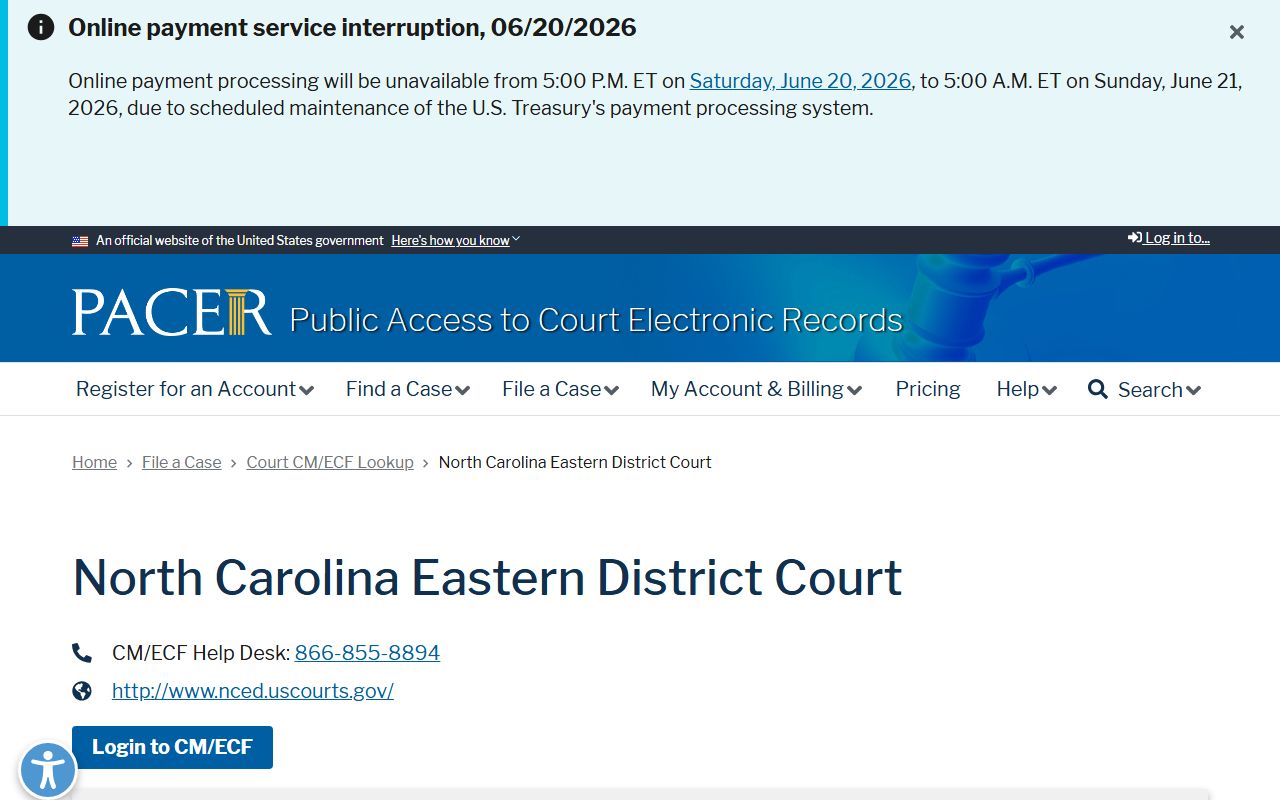
PACER is the federal record lookup route and should not be confused with the North Carolina eCourts Portal.
The U.S. Bankruptcy Court for the Eastern District of North Carolina is another separate federal system.
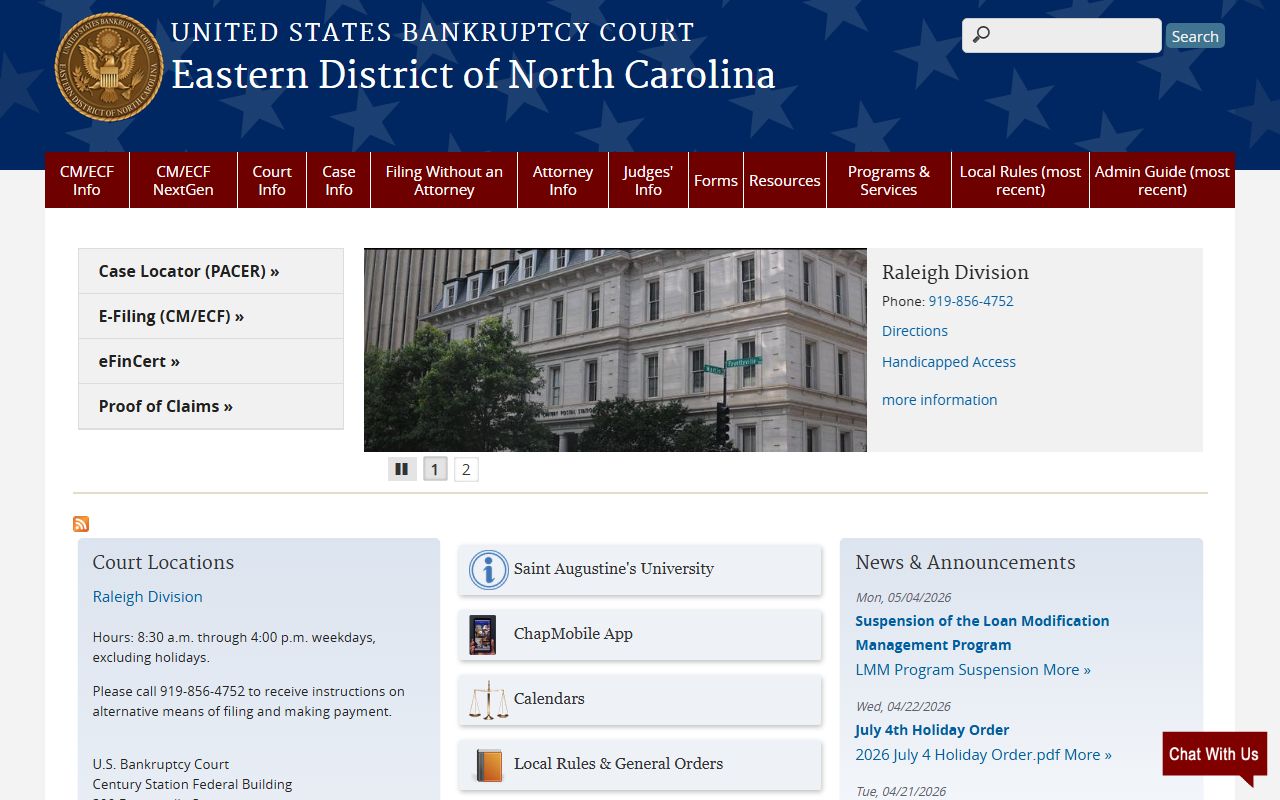
Bankruptcy records are federal records, even when the debtor lives or owns property in Sampson County.
The U.S. Attorney's Office for the Eastern District of North Carolina describes the federal district that includes Sampson County.
That federal prosecution source helps separate federal criminal cases from state criminal files in Sampson County Superior Court and District Court.