
Sampson County Criminal Court Records
A criminal court record is the case-level file kept once a criminal matter is filed in court. For Sampson County, that file can include returned warrants or criminal process, criminal summonses, indictments, informations, appearances, bond orders, pleas, trial entries, dismissals, judgments, sentencing, probation conditions, fines, costs, restitution, and appeal notices. The record may begin with charges, but the court file grows as the case moves through hearings and final disposition.
North Carolina does not run separate county or municipal trial courts. Sampson County criminal cases are handled in the Superior Court and District Court divisions of the North Carolina General Court of Justice. Superior Court generally handles felony criminal cases. District Court generally handles misdemeanors, infractions, traffic, juvenile matters, and front-end magistrate functions. Magistrates issue criminal process, set many initial bonds, and handle other preliminary matters within District Court.
The Chapter 132 court-record provision is one source for public access to returned warrants, indictments, and criminal summonses unless sealed by court order.
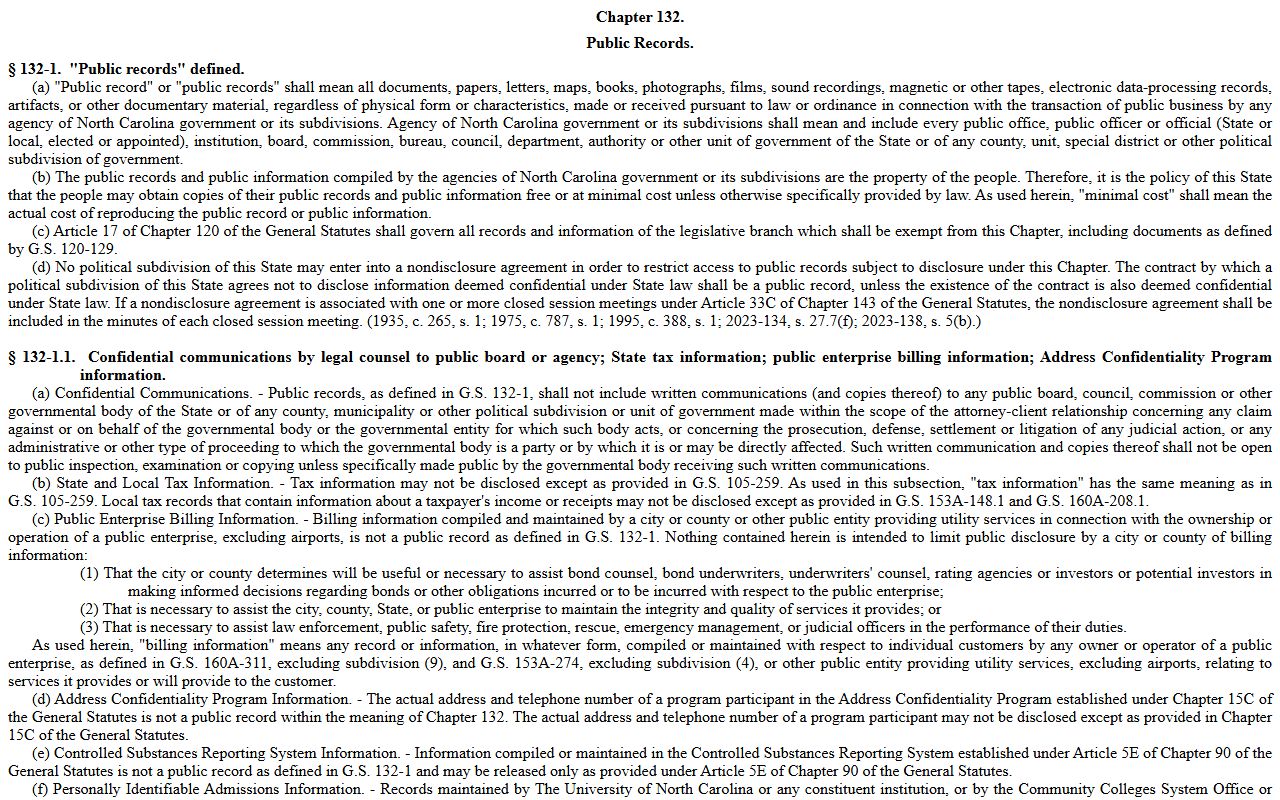
That statute supports access to some criminal process after return or filing, but it does not make every active investigation public.
Search Sampson County Criminal Court Records
Use the North Carolina eCourts Portal for public criminal case lookup in Sampson County. Smart Search allows record-number and name searches, plus advanced filtering by location, case type, case status, file date, and party-related identifiers when available. Select Sampson County when searching a common name because Portal is statewide. Use Search Hearings when the main need is a court date, hearing type, courtroom, or judicial officer.
- Open eCourts Portal and choose Smart Search for case-level lookup.
- Search by record number if known, or by defendant name in the Portal name format.
- Filter to Sampson County and add case type, status, or date limits if results are broad.
- Open the case result and review charges, hearings, docket entries, disposition, and sentence fields that are public.
- Contact the Clerk of Superior Court for certified copies, older records, or criminal files not visible in Portal.
The Judicial Branch court-records help page says background-check-quality searches should use the county clerk's office rather than Portal alone. Sampson County's Clerk of Superior Court can be reached through the court directory and main courthouse phone.
Sampson County Criminal Case Flow
Criminal court records are easiest to read as a process. A sheriff or police arrest may create a booking record, but the court case file follows the prosecution. Charges may be filed, reviewed, amended, dismissed, or resolved by plea or trial. The District Attorney for Prosecutorial District 5 represents the State in Sampson County criminal cases and prepares the criminal trial docket.
Case flow: Charges Filed › Arraignment › Pretrial and Motions › Plea or Trial › Disposition › Sentencing
| Stage | What Happens |
|---|---|
| Charges filed | A complaint, criminal summons, warrant, information, or indictment places the accusation into the court system. |
| Arraignment | The defendant appears for the charge to be addressed and a plea may be entered. |
| Pretrial and motions | The docket may show continuances, discovery, bond issues, suppression motions, plea talks, or other filings. |
| Plea or trial | The case may resolve by guilty plea, dismissal, trial verdict, or another court-approved outcome. |
| Disposition | The record shows the outcome for each charge, which may differ across counts. |
| Sentencing | If there is a conviction, the record may show sentence, probation, costs, fines, restitution, or appeal events. |
The District Attorney's official district page is the source for the prosecutor's role in criminal trial dockets.
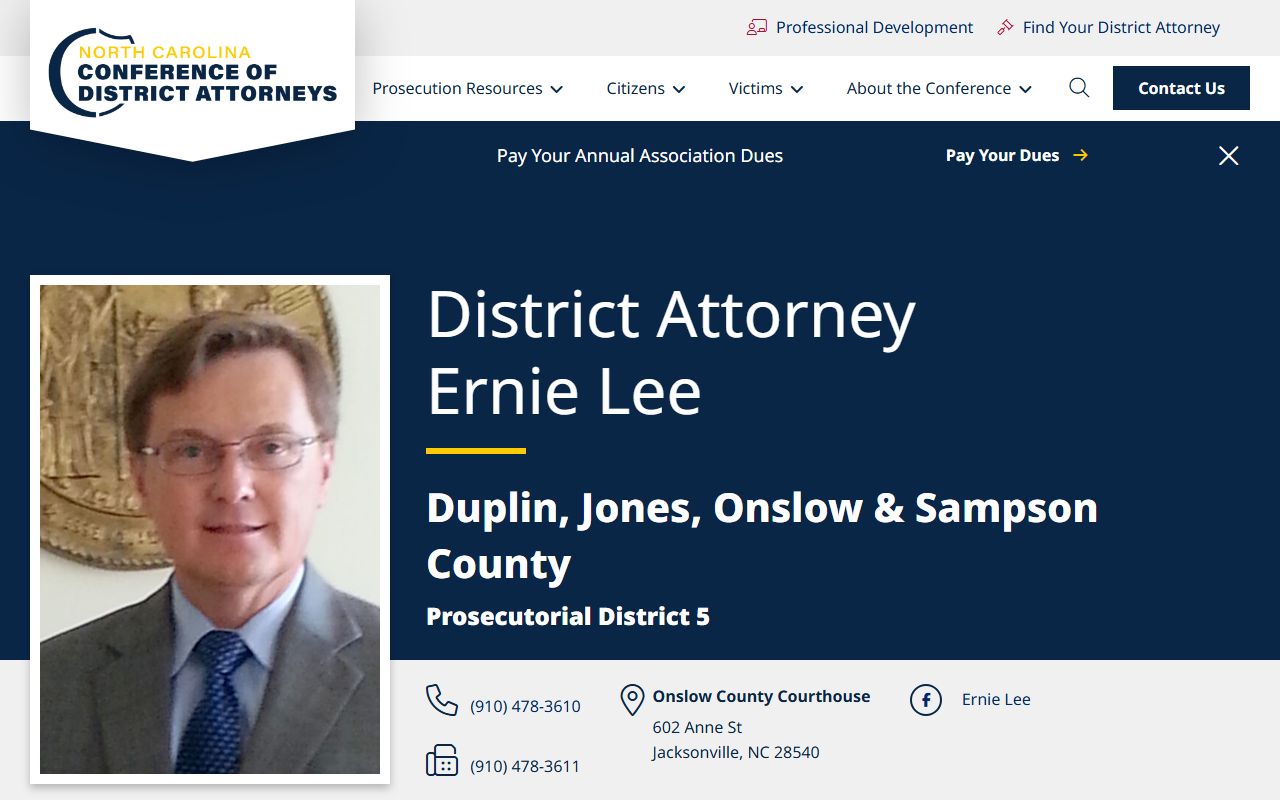
That prosecution role explains why charge decisions and trial calendars are not the same thing as sheriff booking information.
What Sampson Criminal Records Show
A Sampson County criminal court record may show more than a charge list. The court file can include the defendant, state case number, law-enforcement agency, attorney, bond information, court dates, hearings, pleas, motions, orders, disposition, sentence, probation, financial obligations, and appeal status. Some document images may be available online in eCourts counties, but access depends on case type, confidentiality, redaction rules, and user access level.
| Field | What It Shows |
|---|---|
| Case number | The court record identifier used by Portal and the clerk. |
| Defendant | The person accused in the criminal case. |
| Charges | Offense name, statute, offense date, agency, bond, and charge status when shown. |
| Attorney | Defense counsel, appointed counsel, or attorney search information where available. |
| Hearings | Date, time, courtroom, hearing type, judicial officer, and location. |
| Docket entries | Filings, motions, orders, continuances, notices, judgments, probation events, and appeal notices. |
| Plea | The defendant's response to a charge, such as guilty or not guilty, when entered. |
| Disposition | The outcome for the case or charge, such as dismissed, guilty, not guilty, or disposed. |
| Sentence | Any punishment after conviction, including custody, probation, fines, costs, or restitution. |
For the narrower arrest-to-charge path, use Sampson County arrest records and court charges. For jail custody or current confinement, use the inmate record channel rather than the criminal court file.
Sampson Charges vs Convictions
A charge is an accusation. A conviction is a final finding or plea that establishes guilt for a criminal offense. Sampson County criminal court records can show charges that were reduced, amended, dismissed, or resolved by acquittal. One case can also have several charges with different outcomes, so the disposition line for each count matters.
| Point | Charge | Conviction |
|---|---|---|
| Stage | Begins the accusation in the case file. | Comes after a guilty plea, verdict, or qualifying court finding. |
| Meaning | Does not prove guilt by itself. | Creates the criminal outcome that may support sentencing. |
| Record result | May be pending, amended, reduced, dismissed, or disposed. | May include sentence, probation, costs, fines, restitution, or appeal. |
| Public reading | Read with current status and docket events. | Read with sentence and any later expunction or appeal status. |
Sealed vs Expunged Criminal Records
North Carolina law limits access to several criminal or criminal-adjacent records. Juvenile court records are withheld from public inspection under G.S. 7B-3000 except as allowed by statute or court order. Juvenile expunction has its own statute, G.S. 7B-3200. Adult expunction for certain older nonviolent misdemeanors and felonies is addressed in G.S. 15A-145.5.
| Point | Sealed | Expunged |
|---|---|---|
| Public visibility | Restricted from public access by law or court order. | Removed from ordinary public criminal-history access if granted. |
| Record existence | Record may still exist but is hidden from public view. | Record access changes under the expunction order and statutes. |
| Typical examples | Juvenile, mental-health, sealed warrant, or court-ordered sealed files. | Eligible dismissed matters, juvenile records, first-offender paths, or older nonviolent convictions. |
| Where filed | Handled under the court order or statute that restricted the file. | Petition is filed in the county where the case was handled, such as Sampson County. |
G.S. 15A-145.5 is a key source for certain Sampson County criminal court records.
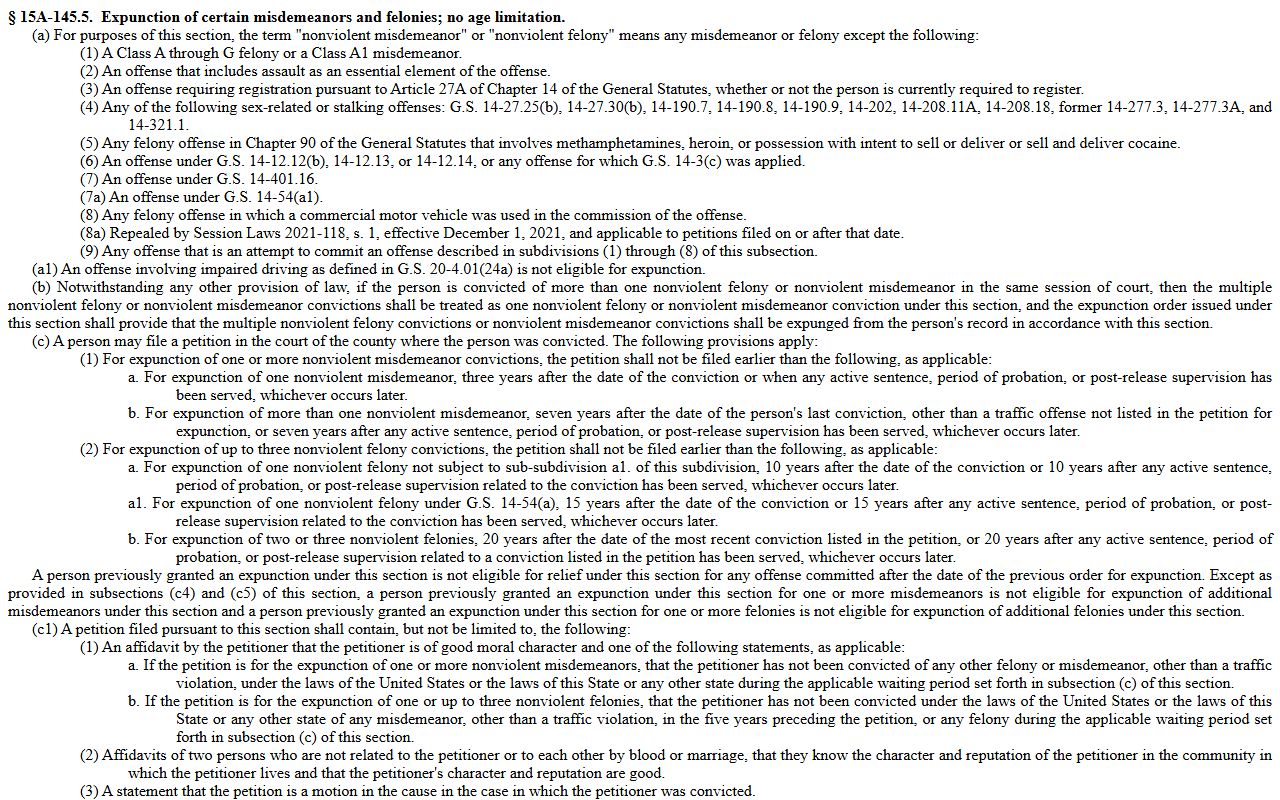
Eligibility depends on the exact charge, disposition, case history, waiting period, and statutory requirements.
G.S. 7B-3000 sets juvenile record limits separate from adult expunction.
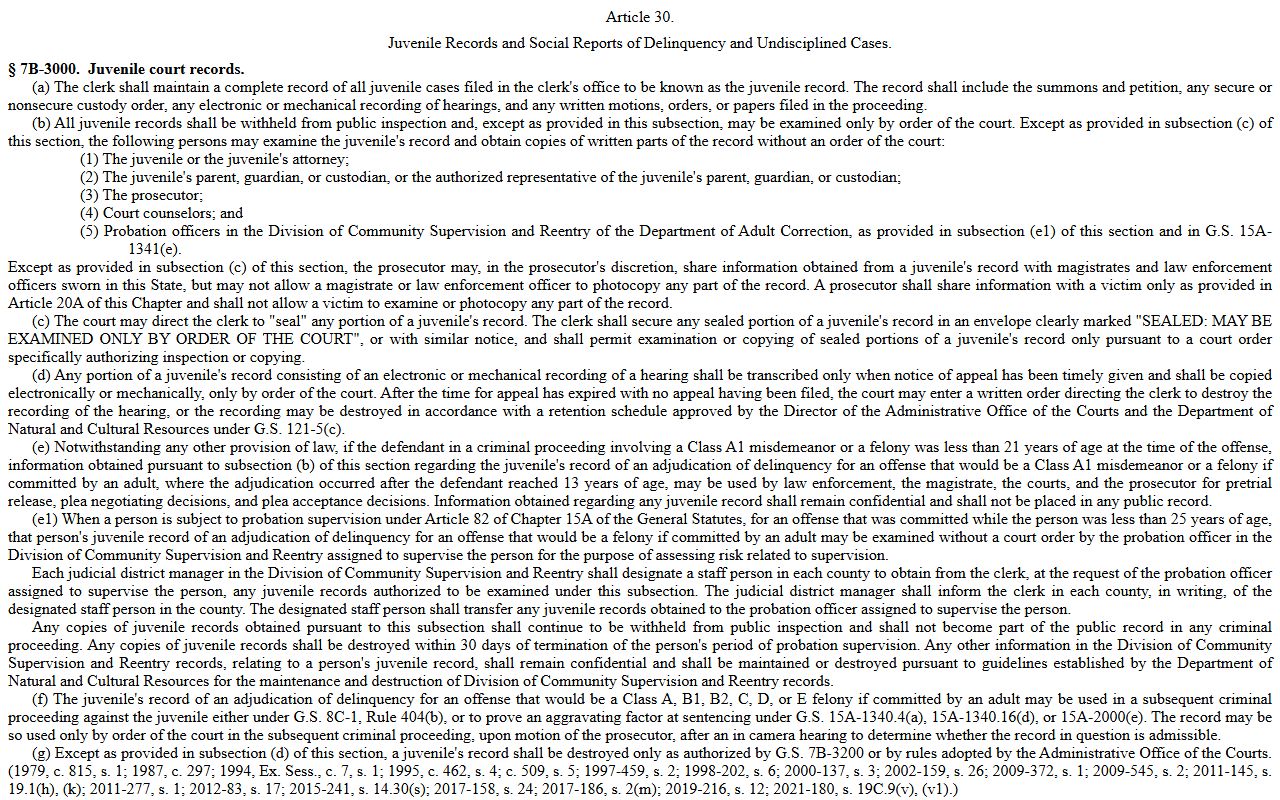
Those juvenile limits mean a Portal search should not be treated as a complete list of every restricted youth matter.
G.S. 7B-3200 gives juvenile expunction its own official statutory path.
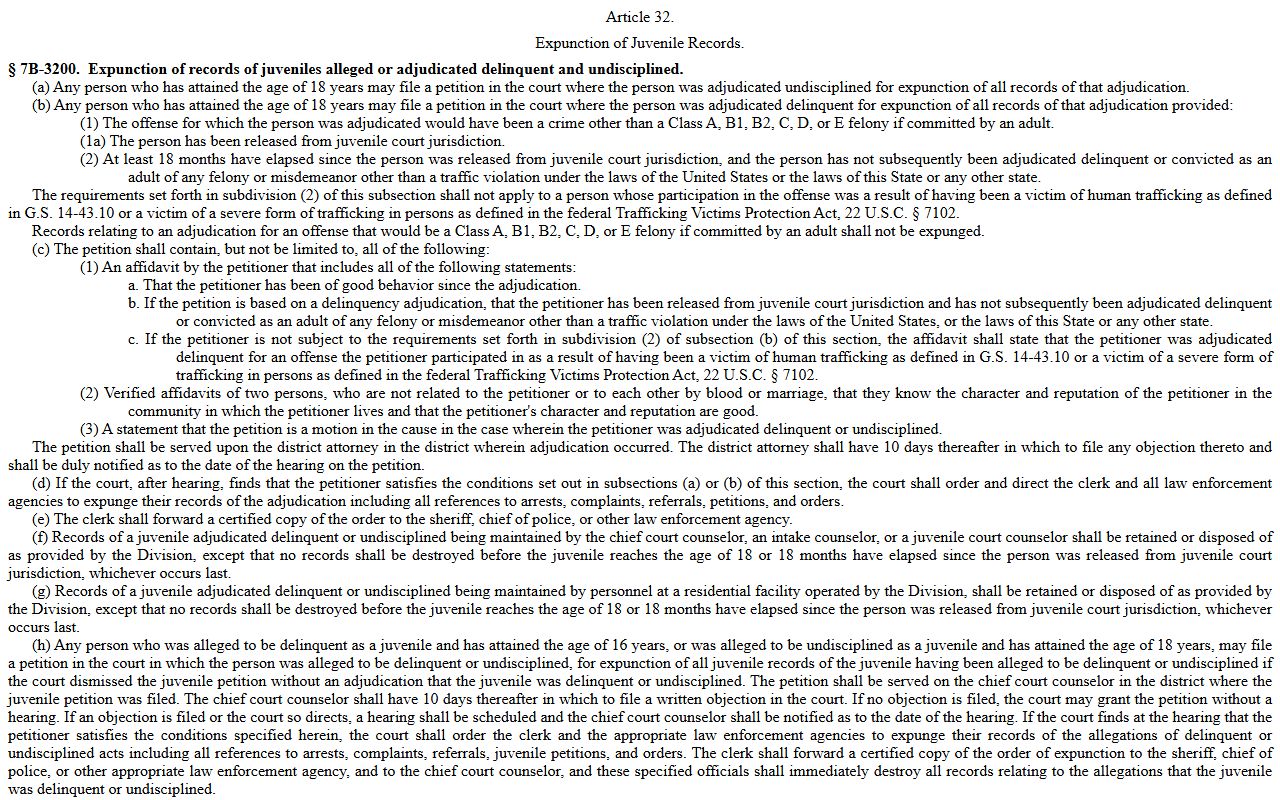
Adult and juvenile relief should not be blended because the eligibility rules and records involved are different.
Public Access to Sampson Criminal Records
G.S. 7A-109 says clerks maintain records, files, dockets, and indexes as prescribed by the Administrative Office of the Courts, with public inspection during regular office hours unless prohibited by law. The Clerk of Superior Court is therefore central for Sampson County criminal court records that need certified copies, older file review, or clerk confirmation.
The NCIDS Sampson County public defender page identifies the local defender structure for appointed counsel, while the District Attorney represents the State. These offices are part of the court ecosystem, but neither replaces the clerk as records custodian.
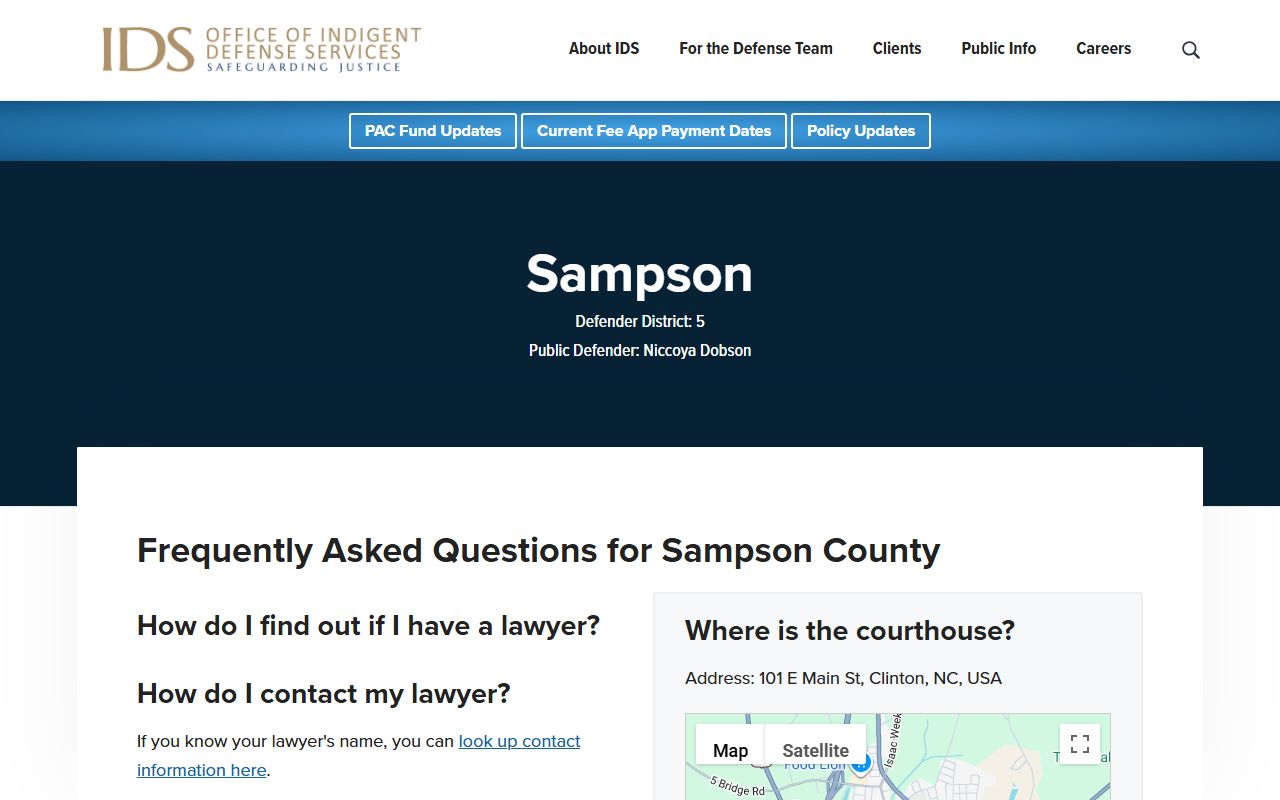
Defense and prosecution contacts can help a party understand a case, but public record copies still route through official court channels.
Note: Portal, clerk records, sheriff booking data, and state offender searches answer different questions and should not be merged as one record.
Restricted Sampson Criminal Court Records
Restricted criminal court records include juvenile cases, sealed files, expunged matters, mental-health proceedings, adoption-related records, and documents with protected personal information. Sampson County also identifies dates of birth, medical records, Social Security numbers, account numbers, and trade secrets as examples of confidential or identifying information in public-record contexts. Court records commonly redact financial account numbers, minors' identifiers, and sensitive data.
A missing Portal result does not always mean no case ever existed. It may mean the case is old, sealed, expunged, juvenile, indexed differently, outside the county, or not visible to anonymous public users. For legal use, certified copies, and background-check-quality searches, contact the Sampson County Clerk of Superior Court at the courthouse.